Corporate catering that goes wrong almost always comes down to one thing which is poor preparation. Wrong headcounts, missing dietary options, late deliveries, and formats that don't suit the occasion are all avoidable with the right checklist in place. Whether you're planning a daily office meal program, an internal team event, or a client-facing occasion, this corporate catering checklist gives you a structured, practical framework so nothing falls through the cracks.
Most corporate catering problems don't happen on the day; they happen weeks before, when assumptions replace decisions. Portion counts get estimated, dietary needs go ungathered, and formats get chosen based on convenience rather than fit. A structured corporate catering checklist removes the guesswork and gives whoever is planning the catering a clear sequence to work through so the day itself runs smoothly.
Before any order is placed, be clear on what you are planning. A recurring daily meal program is built around consistency and dietary coverage. An internal event calls for variety suited to the group's size and tone. A client-facing occasion demands precision and dietary requirements confirmed well in advance. Every decision that follows, including format, budget, vendor, and lead time, flows from which one you are dealing with.
Once that is clear, four things need to be confirmed before making a corporate event catering checklist.
Headcount and Portion Planning
Confirm a real number, not an estimate. Know the dietary breakdown within that headcount and build in a 5 to 10 percent buffer for variable attendance.
Budget Planning and Cost Breakdown
Work backwards from headcount, frequency, and quality level. Separate recurring program costs from one-off event costs and account for hidden coordination time. Consolidated billing from a managed catering partner eliminates most of that friction.
The Dietary Requirements Checklist
Survey the team before launch, like Halal, vegetarian, vegan, gluten-free, and allergens. Ensure dietary options are the default on every menu, not available on special request.
Choosing the Right Catering Format
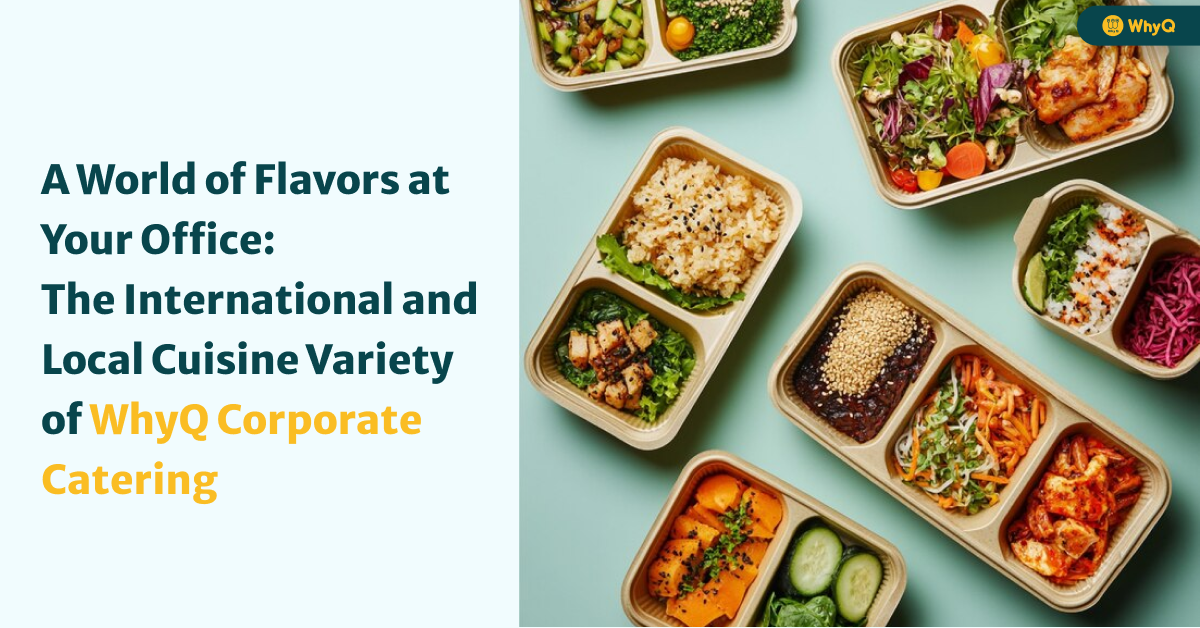
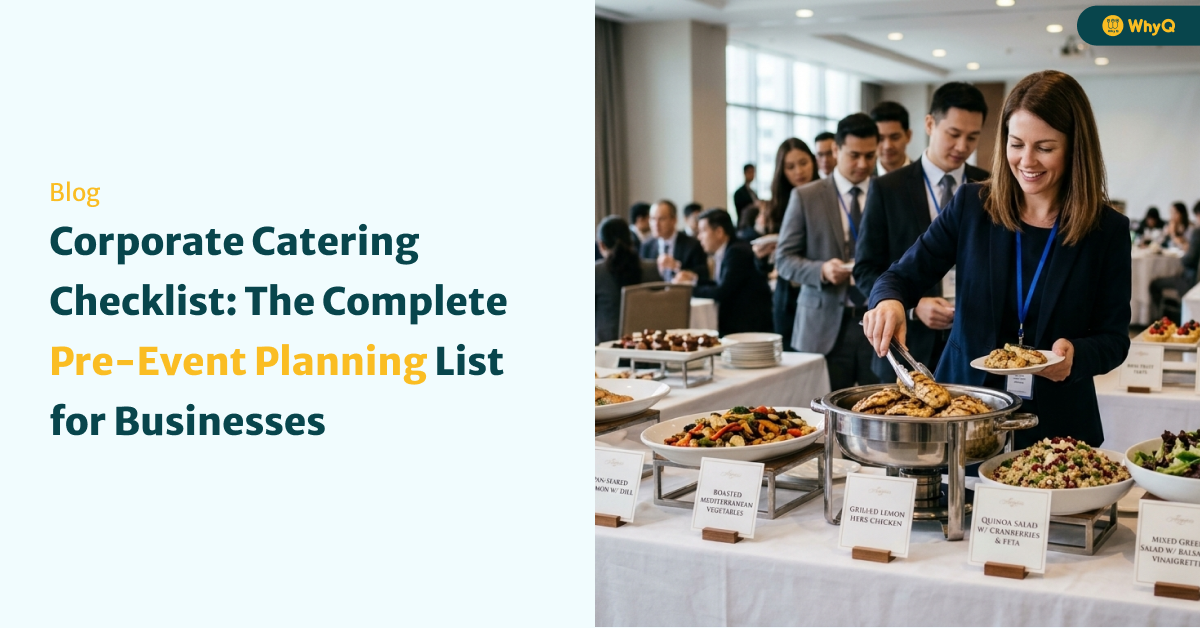
Individually packed meals for meetings and daily programs. Buffet for larger internal gatherings. Live stations for celebrations. Office pantry as a complement for full-day events.
Choosing the right catering partner is as important as choosing the right format. Use this corporate event catering checklist when evaluating and briefing a corporate catering vendor.
Vendor network and cuisine variety: Does the catering partner have a wide enough restaurant and caterer network to deliver genuine variety across cuisines like Chinese, Malay, Indian, Japanese, Western, or is the menu limited to a small fixed selection?
Halal certification and dietary coverage: Are Halal-certified, vegetarian, vegan, and allergen-labelled options really available across the menu as standard and not just listed as options that need to be specifically requested?
In-house delivery capability: Does the catering partner manage delivery with its own fleet, or is delivery outsourced to a third party? In-house delivery means accountability someone to call when timing needs to be adjusted or an issue needs to be resolved quickly.
Dedicated account support: On the same note, find out whether you'll have a dedicated account manager or just access to a general support inbox. The difference becomes obvious the moment you need to make a last-minute headcount change or escalate something urgently before an event.
Minimum order requirements and lead time: Practical things matter too. Understand the minimum order requirements for different catering formats and how far in advance each one needs to be booked for both recurring programs and one-off occasions.
Billing structure: And before signing anything, confirm the billing structure. A single consolidated monthly invoice is significantly easier for finance teams to process than multiple vendor receipts landing at different times throughout the month.
Poor timing is one of the most preventable catering mistakes in the corporate catering checklist. Here are the lead time guidelines to work from for different catering scenarios.
Recurring daily meal programs
For recurring daily meal programs, most managed setups can have the first delivery running within two weeks of the initial conversation, but that window needs to include time for the dietary survey, portal setup, and vendor briefing, so don't leave it until the week before you want meals to start.
Regular weekly team lunches
Weekly team lunches work on a shorter cycle. Employees typically pre-order through the portal a week ahead, so setting a clear internal deadline for order confirmations each week is what keeps the whole process accurate and on time.
Buffet catering for internal events
Buffet setups for internal events need more runway; two to three weeks is the practical minimum to ensure the right vendors are available, menus are curated properly, and delivery logistics are coordinated without last-minute scrambling.
Client-facing occasions and high-stakes events
For client-facing occasions and high-stakes events, two weeks ahead is also the right benchmark, but the earlier the better. When catering needs to be tailored to specific dietary preferences and presentation standards, there's very little room to fix mistakes close to the date.
Last-minute requests
And for last-minute requests, anything coming in with less than a week's notice, the most important thing is to call the catering partner directly rather than assuming the standard process will stretch to cover it. Many partners can accommodate urgent requests depending on headcount and format, but that needs to be confirmed upfront, not assumed.
Even well-planned catering can unravel on the day without a clear logistics checklist in place. Work through these before the event.
Confirm delivery timing and access. Ensure the catering partner has the correct delivery address, floor, and access instructions, including any building security requirements or loading bay procedures, well in advance of the delivery window.
Set up a clear distribution plan for individually packed meals. Know in advance where meals will be distributed, who is responsible for handling distribution, and how dietary labels will be used to ensure each person receives the right meal.
Confirm the setup space for buffets and live stations. Make sure the physical space is ready before the catering partner arrives; tables, serving areas, and power access for live stations all need to be confirmed before the setup begins.
Have a single point of contact on the day. Designate one person internally who is the point of contact for the catering partner on the day of the event. This prevents miscommunication and ensures any issues are resolved quickly through one channel.
Know the escalation process. Before the day, confirm the catering partner's direct contact number for on-the-day support. A partner with in-house delivery and dedicated account management means issues are resolved internally rather than passed between teams.
Preparation is what separates corporate catering that impresses from corporate catering that creates stress, and a structured office catering planning checklist gets you most of the way there. But the final 20 % comes down to the partner executing it.
The right catering partner brings a wide restaurant network, full dietary coverage as standard, reliable in-house delivery, dedicated account support, and consolidated billing so the plan you have built actually gets delivered the way it was intended, every time.
WhyQ is Singapore's corporate catering platform built to do exactly that. From recurring daily office meal programs and multi-restaurant ordering to buffet catering, live food stations, and office pantry services, WhyQ handles the execution end-to-end so your HR and admin teams can focus on everything else.
Get in touch with the WhyQ team today to discuss your upcoming event or office meal program requirements.
Q1. How far in advance should I plan corporate event catering in Singapore?
For daily meals and regular team lunches, 2-3 days notice is usually sufficient . For buffets, live stations, or client-facing events, 1-2 weeks is advisable. Contact us directly at corporate@whyq.sg, and we'll help explore available options for your event.
Q2. What dietary requirements should I always cover for a Singapore corporate event according to the corporate catering checklist?
It's best to include Halal-certified, vegetarian, vegan, and allergen-friendly options. If possible, collect dietary preferences from attendees beforehand so everyone has something suitable to enjoy.
Q3. What is the difference between buffet catering and individually packed meals for corporate events?
Packed meals are great for meetings, training sessions, and client events where convenience matters. Buffets work better for larger gatherings where guests appreciate having more choice and flexibility.
Q4. How do I manage last-minute headcount changes for a catered corporate event?
Let your catering provider know as soon as possible. Most experienced caterers can accommodate reasonable changes if they have enough notice.
Q5. What should I look for when choosing a corporate catering partner in Singapore?
Look for reliable delivery, strong dietary coverage, responsive support, transparent pricing, and the ability to scale with your needs. A good partner should make catering easier, not create extra work for your team.